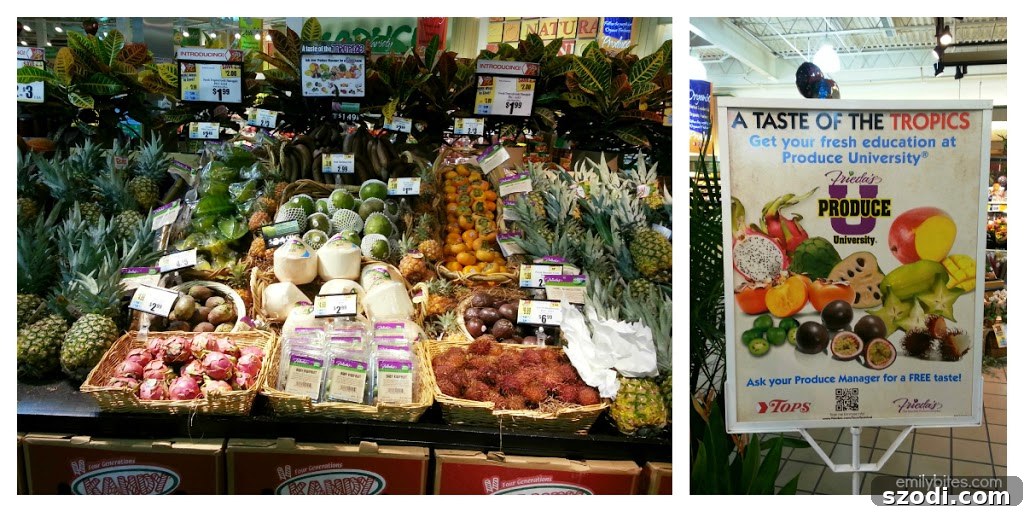
Discovering a World of Flavor: An Exotic Tropical Fruit Tasting Adventure
Are you stuck in a culinary comfort zone, reaching for the same apples, oranges, and bananas every time you visit the grocery store? While these staples are undeniably delicious and nutritious, there’s an entire universe of vibrant, exotic fruits waiting to awaken your taste buds! Recently, I had the incredible opportunity to dive headfirst into this world, thanks to an invitation from Frieda’s: The Specialty Produce Company. They reached out to me with a fascinating proposal: to conduct a tropical fruit tasting right in my local supermarket. As someone who enjoys fruit but admits to a rather predictable selection, the idea of expanding my fruit horizons was instantly captivating. I realized this was a fantastic chance to explore new flavors, textures, and aromas that I’d never encountered before.
My culinary curiosity was piqued, and I suspected many of you might share a similar “fruit rut.” So, armed with my camera and an adventurous palate, I embarked on this tasting journey, carefully documenting my experiences. The results were nothing short of eye-opening. While some fruits certainly stole the show more than others, I am incredibly grateful for the chance to try them all. More importantly, I discovered several new favorites that will undoubtedly become regular additions to my shopping cart. I hope my personal findings will inspire you to step out of your own fruit comfort zone. The next time you’re at the market, consider picking up something new and utterly unique – you might just discover your next obsession!
The Allure of Tropical Fruits: Why You Should Expand Your Palate
Tropical fruits aren’t just visually stunning; they offer a wealth of flavors, textures, and nutritional benefits that can enrich your diet and culinary experiences. From the sweet and succulent to the tangy and tart, these exotic delights introduce new dimensions to meals and snacks. Incorporating a wider variety of fruits can boost your intake of essential vitamins, minerals, and antioxidants, contributing to overall well-being. Beyond the health aspects, there’s a simple joy in discovery – the excitement of peeling back a strange skin to reveal a vibrant interior, or biting into a fruit that tastes unlike anything you’ve had before. It’s a culinary adventure that brings a touch of the exotic right into your kitchen. Break free from monotony and let these remarkable fruits transport you to sun-drenched orchards and distant lands, one delicious bite at a time.
Rambutan: The Hairy Delight of Southeast Asia
As I first scanned the vibrant tropical fruit display, one fruit immediately captured my attention: the Rambutan. Its striking appearance, reminiscent of a spiky, vibrant red porcupine, was both intimidating and incredibly intriguing. Those soft, pliable tendrils, however, proved to be entirely harmless – a gentle invitation to explore its hidden delights. Peeling a Rambutan is surprisingly simple; a quick slit through its thin skin allows you to easily squeeze out the translucent, luscious fruit within. This ease of access quickly made it one of my top picks from the entire tasting session.
The flavor profile of Rambutan is wonderfully sweet, with a delicate tropical essence that is both refreshing and satisfying. Its texture is remarkably similar to a juicy, firm grape, offering a pleasant bite. Like its lychee cousin, Rambutan contains a single, inedible pit at its core, so it’s best to enjoy it by gently nibbling around the seed. Rich in Vitamin C and fiber, this delicious fruit is not only a treat for the palate but also a nutritious snack. I wholeheartedly recommend trying Rambutan – it’s an accessible and delightful entry point into the world of exotic fruits, perfect for fresh consumption or even in fruit salads and desserts.
Red Bananas: A Familiar Favorite with an Exquisite Twist
Bananas are a household staple for many, including myself, yet finding that elusive perfect ripeness can often feel like a quest. My experience with the Red Banana, however, was a delightful surprise. Visually striking with its deep reddish-purple peel, this variety proved to be a fantastic alternative to its yellow counterpart. The taste was familiar, distinctly banana-like, but with an added nuance that truly stood out. It possessed a subtle tanginess, a characteristic I adore in slightly under-ripe yellow bananas, which seems to be a natural part of its inherent flavor profile. This particular ripeness meant I could enjoy it before any brown spots appeared, ensuring a firm and flavorful experience.
The texture of the Red Banana is consistent with what you’d expect from a traditional banana – creamy, smooth, and satisfyingly soft when ripe. However, many enthusiasts note that red bananas can be slightly sweeter and have a faint raspberry-like undertone when fully mature. They are an excellent source of potassium and Vitamin C, just like yellow bananas, making them a nutritious choice. Whether sliced into a smoothie, added to oatmeal, or simply enjoyed on its own as a quick energy boost, the Red Banana offers a subtly elevated banana experience. It’s a definite winner for those seeking a slight variation on a classic.
Baby Kiwi: Tiny Treats, Big Flavor, and Utterly Irresistible
Without a doubt, the Baby Kiwi emerged as my absolute favorite from this entire tropical fruit adventure. These miniature marvels are not just incredibly adorable, resembling plump grape tomatoes, but they also offer an unparalleled convenience that sets them apart from their larger, fuzzy relatives. The most exciting feature? Their skin is entirely smooth and completely edible, eliminating the need for any peeling whatsoever! You can simply pop them into your mouth, just like grapes, for an instant burst of flavor.
The taste profile of Baby Kiwi is a perfect harmony of sweet and subtly tart. The vibrant green flesh inside is notably sweeter than that of a standard kiwi, while the delicate skin adds a refreshing, mild sourness that balances the overall experience beautifully. I found myself devouring an entire container in a single sitting, a testament to their irresistible nature. These tiny powerhouses are also packed with Vitamin C and dietary fiber, making them a healthy and delicious snack. Whether enjoyed on their own, tossed into a fruit salad, or even as a sophisticated garnish, Baby Kiwi are a sensational find, and they will absolutely be a recurring item on my grocery list.
Dragon Fruit (Pitaya): Beauty That’s More Than Skin Deep?
The Dragon Fruit, also known as Pitaya, is undeniably one of the most visually stunning fruits you’ll ever encounter. Its bold, bright pink skin adorned with vibrant green scales creates a truly exotic and captivating appearance. It’s the kind of fruit that screams “tropical paradise” even before you’ve sliced into it. However, as striking as its exterior is, the skin itself is not edible. Once you cut through its impressive facade, you’re greeted by a creamy white, sometimes red or yellow, flesh studded with a multitude of tiny, edible black seeds, reminiscent of a kiwi’s interior.
My initial anticipation for a flavor as bold as its looks was met with a mild surprise. The texture of Dragon Fruit is comparable to a soft kiwi, pleasantly juicy and refreshing. However, its flavor proved to be quite subtle, offering only a very delicate sweetness. While certainly not unpleasant, I must admit I had expected a more intense or complex taste given its flamboyant presentation. It served as a gentle reminder not to judge a fruit (or a book) purely by its cover! Despite its mild flavor, Dragon Fruit is a good source of fiber, Vitamin C, and antioxidants. It’s an excellent addition to smoothies, fruit salads for visual appeal, or as a light, hydrating snack, especially if paired with stronger flavors.
Cherimoya: The Custard Apple Enigma – A World of Contradictions
The Cherimoya, often lauded as the “custard apple,” arrived with a bold promise: a “sherbet-like texture.” This description instantly sparked my excitement, eager to experience such a unique characteristic in a fruit. Its exterior is a peculiar greenish, scaly skin that hints at the treasures within. Upon cutting it open, the flesh is soft, creamy, and white, studded with large, dark, inedible seeds that need to be removed before consumption. The texture lived up to the billing – it was indeed incredibly smooth, creamy, and wonderfully soft, almost melting in the mouth. However, when it came to flavor, my experience was, regrettably, a bit perplexing.
My initial tasting notes were succinctly, if not vaguely, captured as “weird taste.” In an effort to decode this elusive “weirdness,” I later researched Cherimoya and discovered a fascinating consensus: many describe its flavor as a delightful fusion of pineapple, banana, strawberry, mango, and even bubblegum, often hailed as one of the most delicious fruits. Mark Twain himself famously declared it “the most delicious fruit known to men.” This stark contrast between my perception and widespread acclaim left me wondering if I perhaps encountered an unripe or subpar specimen. It’s a fruit that clearly divides opinions or requires perfect ripeness to shine. Despite my personal lukewarm reception, the Cherimoya’s legendary status makes it a must-try for any adventurous eater. I urge you to seek it out, experience it for yourself, and perhaps you’ll unlock the secret deliciousness that eluded me – and then, please, let me know what you think!
Star Fruit (Carambola): A Glimmering Star on Your Plate
The Star Fruit, or Carambola, is undoubtedly one of the most photogenic fruits in the tropical array, instantly recognizable by its distinctive star shape when sliced crosswise. This visual appeal makes it a fantastic garnish for dishes and drinks. Its bright, waxy yellow-green skin is entirely edible, meaning preparation is wonderfully straightforward: a simple wash, a quick trim of the dark edges (which indicate ripeness, as the Produce Manager at Tops kindly informed me), and then slice it into those iconic star shapes. No peeling or deseeding required, making it an incredibly convenient snack.
My tasting experience with Star Fruit was overwhelmingly positive. The texture is truly unique and pleasantly crisp, perhaps best described as a refreshing cross between a firm apple and a watery celery stalk, offering a satisfying crunch. What truly surprised me was its complex flavor profile. I expected something straightforward, but instead found a delightful blend of citrusy notes, coupled with a balanced sweetness and a subtle tartness. Many liken its taste to a harmonious combination of apple, pear, and various citrus fruits, an assessment I wholeheartedly agree with. Rich in Vitamin C and antioxidants, Star Fruit is not only a delightful treat but also a healthy choice. It’s a versatile fruit that shines in salads, as a decorative garnish, or simply enjoyed on its own as a hydrating, flavorful snack. I would enthusiastically eat Star Fruit again and highly recommend it for its unique appearance and refreshing taste.
Passion Fruit: A Burst of Tangy Sweetness and Aromatic Bliss
Passion Fruit was a particular highlight for me, largely because while I’d enjoyed its vibrant flavor in countless juices and smoothies, I had never truly experienced it in its raw, unadulterated form. Its unassuming, often wrinkled, purple or yellow exterior hides an extraordinary treasure within. The key to selecting a perfectly ripe passion fruit, as I learned, is to embrace the wrinkles – the more wrinkled the skin, the sweeter and more flavorful the pulp inside. Once sliced open, the interior reveals a mesmerizing sight: a cavity filled with an aromatic, gelatinous pulp and crunchy edible seeds, strikingly similar in texture to a pomegranate.
The preparation is simple yet satisfying: I scooped out the pulp and gently pressed it with a spoon to release its intensely fragrant juice. The aroma alone was intoxicating, a sweet and floral invitation to taste. The flavor profile is an exhilarating dance between intensely sour and beautifully sweet, much like a gourmet sour candy. It’s an incredibly dynamic taste that immediately sparked culinary ideas – my first thought being, “This would be an amazing addition to any cocktail!” Beyond drinks, Passion Fruit is fantastic in desserts, yogurt, or drizzled over fresh fruit salads. It’s an excellent source of Vitamin C and dietary fiber. This captivating fruit quickly became one of my undisputed favorites during the tasting. My enthusiastic notes, “I like this one!!”, underlined multiple times, serve as a testament to its memorable impact. If you crave a bold, aromatic, and uniquely balanced flavor, Passion Fruit is an absolute must-try.
Persimmons: Nature’s Sweet, Autumnal Candy
Persimmons, with their distinct orange hue, often bear a visual resemblance to tomatoes, but their firm texture is more akin to an apple when unripe, softening considerably as they mature. There are generally two types: astringent (like Hachiya) which must be fully ripe and jelly-soft to be edible, and non-astringent (like Fuyu) which can be eaten firm. During my tasting, I encountered a non-astringent variety, identifiable by its squat, apple-like shape. The skin is typically edible, but for an optimal experience, I opted to try it both peeled and unpeeled after cutting it into segments.
The interior flesh of a ripe persimmon boasts a beautiful, vibrant orange color, not unlike a ripe mango. Its texture struck me as pleasantly soft and juicy, reminiscent of a sweet cantaloupe or even a ripe apricot. What truly defines the persimmon’s appeal is its wonderfully sugary flavor. It delivers an intense, almost caramel-like sweetness that makes it an absolute delight for anyone with a sweet tooth. Rich in vitamins A and C, as well as fiber, persimmons are a healthy addition to a diverse diet. They are excellent when eaten fresh, sliced into salads, baked into desserts like tarts and muffins, or even dried for a chewy snack. If you adore incredibly sweet fruits, the persimmon is a seasonal gem you absolutely must seek out.
Prickly Pear / Cactus Pear: A Desert Jewel with a Unique Charm
The Prickly Pear, also known as Cactus Pear or Tuna, is a truly captivating fruit, both in appearance and origin. Its exterior is a vibrant pinkish-red, often with a slightly bumpy, thorny surface (hence the “prickly” name, though many commercially sold varieties are de-spined). Once peeled – a careful process to avoid any remaining glochids – the interior reveals an equally stunning, jewel-toned magenta flesh, generously dotted with numerous small, hard seeds. This visual drama makes it a fantastic addition to platters and salads.
My personal experience with the Prickly Pear was a mixed bag, primarily due to the abundance of seeds. While the texture was pleasantly soft and juicy, and the flavor mildly sweet, navigating the numerous seeds during a public tasting was less than ideal – a dilemma between swallowing them whole or discreetly spitting them out. Flavor-wise, it was decent but didn’t quite win me over. Interestingly, I later found descriptions online that likened its taste profile to a curious blend of bubble gum and watermelon. Given my strong aversion to artificial bubble gum flavor, this certainly colored my perception and likely contributed to my less enthusiastic reaction. However, many people adore its subtle sweetness and unique character.
Despite my personal reservations about the seeds, the vibrant juice of the Prickly Pear holds great potential for culinary applications. It could be a wonderful addition to cocktails, sorbets, jams, or sauces, where the seeds can be strained out. Rich in antioxidants, Vitamin C, and magnesium, it’s also a healthy choice. If you’re an adventurous food lover, don’t let my experience deter you; the Prickly Pear offers a distinctly different taste and aesthetic that might just surprise and delight your palate. It’s an experience worth having for its sheer uniqueness.
Tips for Your Own Tropical Fruit Adventure
Inspired to embark on your own journey into the world of exotic fruits? Here are a few practical tips to help you make the most of your tropical fruit adventure:
- Seek Out Specialty Stores: While many mainstream supermarkets are expanding their exotic produce sections, specialty grocers and Asian markets often offer a wider selection and knowledgeable staff.
- Don’t Be Afraid to Ask: Produce managers are usually a fantastic resource. They can offer advice on how to pick ripe fruit, proper storage, and even preparation tips.
- Check for Ripeness: Each fruit has its own indicators of ripeness – whether it’s color, firmness, or even a slight give to the skin. Do a quick online search if you’re unsure.
- Start Simple: Begin with fruits that are easier to prepare, like Baby Kiwi or Star Fruit, before tackling those with more complex preparation, like Prickly Pear.
- Taste with an Open Mind: Flavors can be incredibly diverse. What one person loves, another might find unusual. Embrace the experience and form your own opinion!
- Experiment with Usage: Beyond eating them fresh, consider how these fruits might enhance your cooking. Think smoothies, salsas, desserts, or even savory dishes.
Embrace the Exotic: Final Thoughts and a Call to Adventure
This tropical fruit tasting was an absolutely unforgettable experience, transforming my perception of what fruit can be. It was a delightful exploration of colors, aromas, textures, and tastes that transcended the everyday. From the sweet surprise of the Rambutan and the refreshing tang of Baby Kiwi, to the visual spectacle of Dragon Fruit and the complex flavors of Passion Fruit, each fruit offered a unique story and a distinct sensory journey. I thoroughly enjoyed stepping out of my fruit comfort zone, and I genuinely hope that sharing my findings has ignited a spark of culinary curiosity within you.
The beauty of food lies in its diversity, and tropical fruits are a testament to nature’s incredible artistry. I certainly discovered new staples for my kitchen and can confidently say that my future grocery trips will be far more adventurous. I wholeheartedly encourage you to follow suit: pick up a fruit you’ve never tried before on your next shopping excursion. You might just uncover a new favorite, expand your palate, and add an exciting dimension to your healthy eating habits.
My sincere gratitude goes to the incredibly helpful and accommodating managers at Tops Friendly Markets on Maple Road in Amherst, NY. Their generosity in allowing me to sample such a diverse array of fruits, coupled with their valuable insights and information about each one, made this tasting session truly exceptional. It was a blast, and an experience I won’t soon forget!